The Six-Hour Instrument: Voice Care for People Who Talk for a Living
Teachers run a six-hour vocal performance daily with zero training — and lose voices at rates that make voice clinics call it an occupational epidemic. The instrument is maintainable: projection technique, hydration law and the rest windows. Voice care for the talking professions.

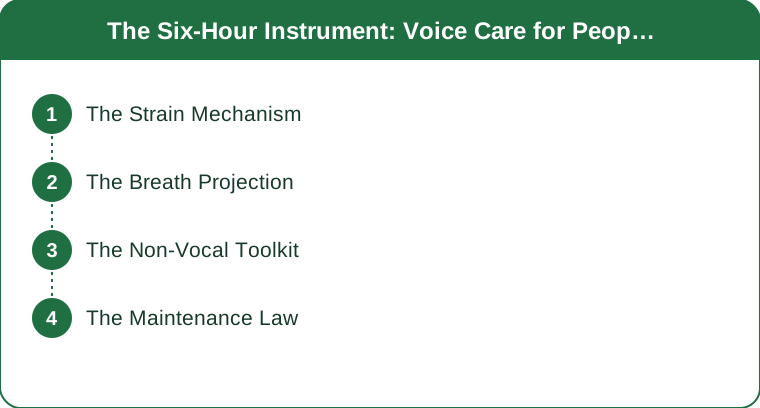
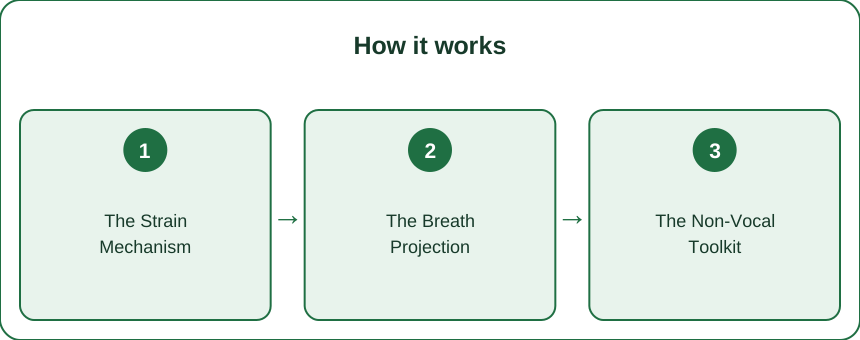
The Strain Mechanism
The teacher’s voice injury is overuse plus technique: projecting from the throat (squeezing volume) instead of the breath (supporting it), hours daily, over dry classroom air. The hoarse-by-Friday pattern is the warning; the chronic version books the clinic. The fix is technique before the injury, not rest after.
The Breath Projection
The technique singers pay for: volume from the diaphragm — deep belly breath, sound riding the exhale, throat as the passage not the engine. The test: hand on belly while projecting; it should engage. Ten minutes of practice (the hum-then-project drills) resets years of throat-pushing.

The Non-Vocal Toolkit
The volume alternatives: proximity beats projection (walk to the group instead of shouting across), the silent attention signals (the hand raise, the lights, the clap pattern — decibels saved per day: thousands), and the classroom’s quiet-voice paradox: teachers who speak SOFTER often get more attention than the escalators. The voice is the tool of last resort, spent wisely.
The Maintenance Law
The daily care: water constantly (the guarded bottle — vocal folds run on hydration; the guide’s bathroom-window strategy applies), vocal rest windows (silent lunches sometimes; the commute without podcasts occasionally — the instrument needs breaks), steam for the rough weeks, and the whisper myth retired (whispering strains MORE than soft speech). Hoarseness past two weeks sees a doctor — the instrument is uninsured and irreplaceable.
Project from the belly, walk instead of shout, water always, rest windows scheduled. The voice was the career’s actual instrument — six hours a day deserves the technique singers consider basic.
Keep Reading
This article is for general informational purposes only and is not medical advice. Always consult a qualified health professional for guidance specific to you.