Why the Unused Lunch Break Is the Real Reason Teachers Burn Out Faster
A hard class period or a difficult parent conversation gets pointed to as the source of teacher burnout, since those moments are memorable and specific. But the lunch break, the one built-in recovery window in a teaching day, gets spent grading, prepping, or supervising far more often than it gets used to actually decompress, and that daily gap compounds into burnout more than any single hard moment does.

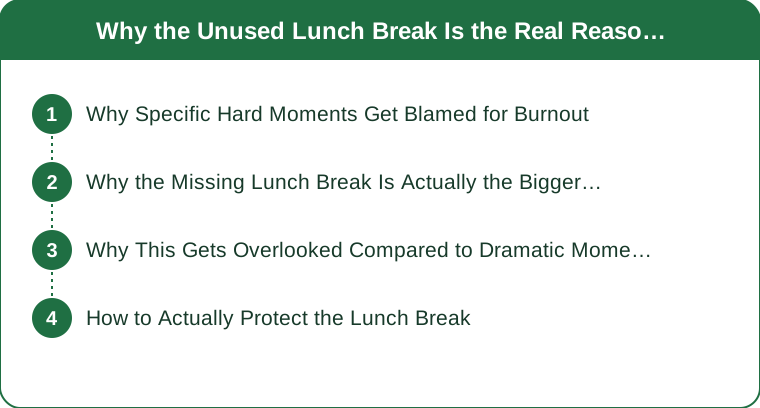
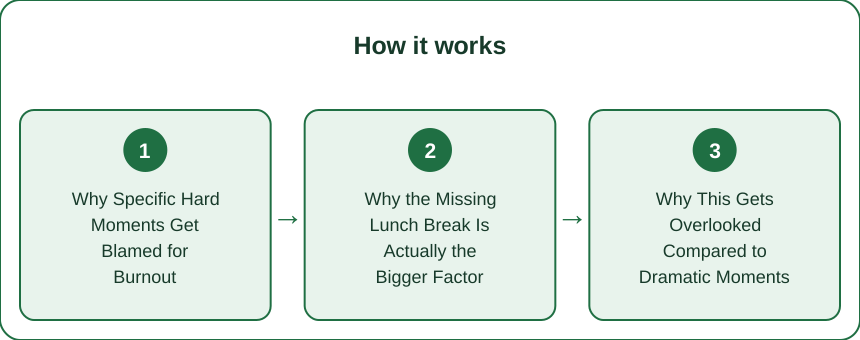
Why Specific Hard Moments Get Blamed for Burnout
The memorable-event bias: a disruptive class or a tense parent meeting standing out as a clear, nameable source of stress, which makes it easy to point to those moments as the reason for feeling drained by the end of the year.
Why the Missing Lunch Break Is Actually the Bigger Factor
The cumulative math: a school day built with exactly one unstructured break, and when that break routinely gets filled with grading, lesson prep, or hallway duty instead of actual rest, there is no recovery window left anywhere in the day, turning every day into a stretch of continuous output with zero built-in recharge.

Why This Gets Overlooked Compared to Dramatic Moments
The overlap: skipping lunch to catch up on grading feeling productive and even virtuous in the moment, which is why it doesn’t register as a stress factor the way a difficult class period does, even though it’s removing the only recovery point in the schedule.
How to Actually Protect the Lunch Break
The practical shift: treating the lunch period as a non-negotiable break for at least fifteen uninterrupted minutes, closing the grading folder and stepping outside or into the staff room, and the frame (the missing lunch break compounds into burnout more than any single hard class period — protecting even fifteen minutes of it is what actually changes the trajectory of the day.)
A hard class period or a difficult parent conversation gets pointed to as the source of teacher burnout, but the lunch break, the one built-in recovery window in a teaching day, routinely gets spent grading or prepping instead of resting. That daily gap compounds into burnout more than any single hard moment, since skipping lunch to catch up on work feels productive in the moment and doesn’t register as a stress factor the way a dramatic classroom event does. Treating even fifteen uninterrupted minutes of the lunch period as non-negotiable is what actually changes the trajectory of the day.
Keep Reading
This article is for general informational purposes only and is not medical advice. Always consult a qualified health professional for guidance specific to you.