Teacher Wellness: Surviving and Thriving in the Most Depleting Wonderful Job
Teaching is the profession that gives everything and invoices the body: on your feet six hours, voice projecting over decades, nervous system co-regulating thirty young humans at once, lunch eaten in eleven minutes while supervising. Teacher wellness advice usually amounts to bubble-bath platitudes from people who have never done a hall duty. This guide is different: classroom-compatible strategies for the energy, voice, feet and boundaries of women who teach — written with respect for the eleven minutes. (And a note: burnout beyond habits deserves real support — counselors and doctors included.)

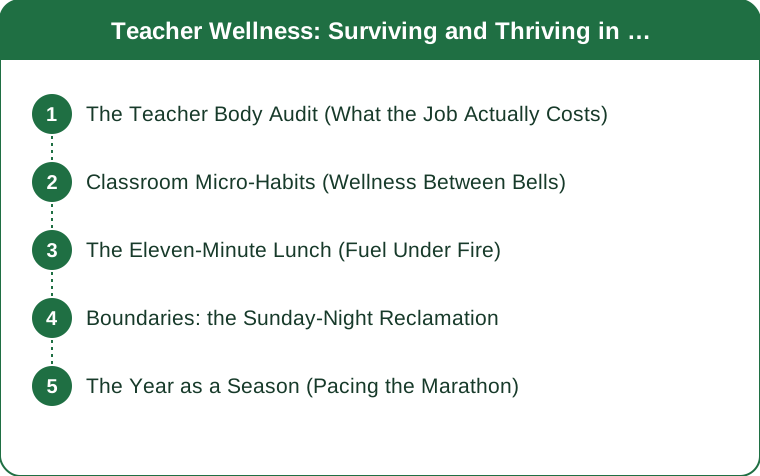
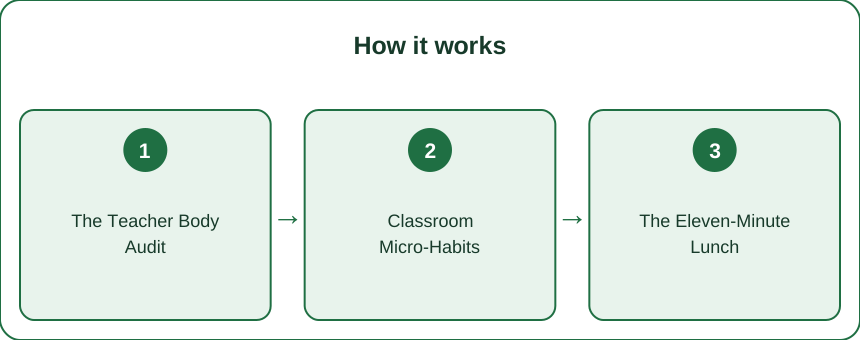
The Teacher Body Audit (What the Job Actually Costs)
Name the physical loads first: six-plus standing hours (feet, veins and lower backs keep score), vocal strain that makes teachers a top profession for voice disorders, decision fatigue at a documented scale (educators make more per-minute decisions than most professions — the 4pm brain fog is arithmetic, not weakness), immune exposure that needs no explanation to anyone who has taught a September, and the co-regulation load: managing a room’s emotional weather all day is invisible labor with visible cortisol. Wellness that ignores these specifics is decoration. Everything below targets one of them.
Classroom Micro-Habits (Wellness Between Bells)
The strategies that fit inside a school day: teach in supportive shoes and rotate two pairs midweek (plus compression socks on long days — the nurse-corps secret teachers deserve too), hydrate strategically around your actual bathroom windows (dehydrating yourself to avoid leaving class is the profession’s worst open secret — protect passing-period water like a lesson plan), voice care as occupational safety (project from the breath not the throat, use proximity instead of volume, and adopt silent attention signals that save a thousand daily decibels), and movement snacks with the kids — the stretch break you lead them through counts double.

The Eleven-Minute Lunch (Fuel Under Fire)
Teacher nutrition is a logistics problem: breakfast is load-bearing (protein-forward and eaten, period — the 6am yogurt bowl outperforms any midday intention), lunches must be prepped, grabbable and eatable in fragments (bento-style boxes, protein mains, nothing requiring assembly or reheating queues), the desk drawer holds the emergency line (nuts, jerky, protein bars — the difference between surviving fifth period and snapping during it), and the drive-home hunger that ambushes at 3:30 gets a planned snack, not a vending surrender. None of this is aspirational-influencer eating. It is fueling a performance profession like the athletes-of-patience its members are.
Boundaries: the Sunday-Night Reclamation
The psychological load needs structural answers: a work-shutdown ritual with teeth (grading and email end at a named hour — the profession will consume every offered minute and invoice you for more), the Sunday-scaries counterprogram (Sunday evening plans that are not prep — the research on rumination says the anticipation is often worse than the Monday), scripts for the boundary moments (I will respond during school hours is a complete sentence to parents and a healthy model for students), and the summer reframe: recovery is not laziness but the profession’s built-in survival mechanism — guard at least a few weeks of it from curriculum planning with your whole chest.
The Year as a Season (Pacing the Marathon)
Teachers live an annual periodization athletes would recognize: August-September demands deliberate base-building (sleep discipline before the immune gauntlet arrives), October-through-March is maintenance season (the minimum effective habits — three walks, prepped lunches, the shutdown ritual — protected precisely when motivation is thinnest), standardized-testing and concert-season spikes call for triage mode without guilt (basics only, standards lowered on purpose, recovery scheduled after), and June is transition, not collapse (the famous teacher-crash of early summer softens when the year included actual maintenance). You pace a classroom marathon annually. Your own body deserves the same coaching.
Teacher wellness, with the platitudes removed: supportive shoes and guarded water, protein that survives eleven minutes, a voice treated as the professional instrument it is, boundaries with actual teeth, and a school year paced like the marathon it demonstrably is. Pick the one habit your body flagged while reading and install it this week. You spend every day building humans. The builder counts too — professionally, structurally, and starting now.
Keep Reading
This article is for general informational purposes only and is not medical advice. Always consult a qualified health professional for guidance specific to you.