Why Classroom Heat in Late August Drains You More Than the Teaching Does
Quick Answer: A full classroom generates a large amount of heat from bodies and equipment, most school buildings have limited cooling, and the teacher is the one person standing and talking continuously. Standing raises heat production above seated levels, speaking demands steady respiratory effort, and a warm room means your body is doing thermoregulatory work all day on top of the job. The exhaustion in the first weeks back is largely thermal, and it is treatable.
It is not that you are out of practice. The room is working against you.
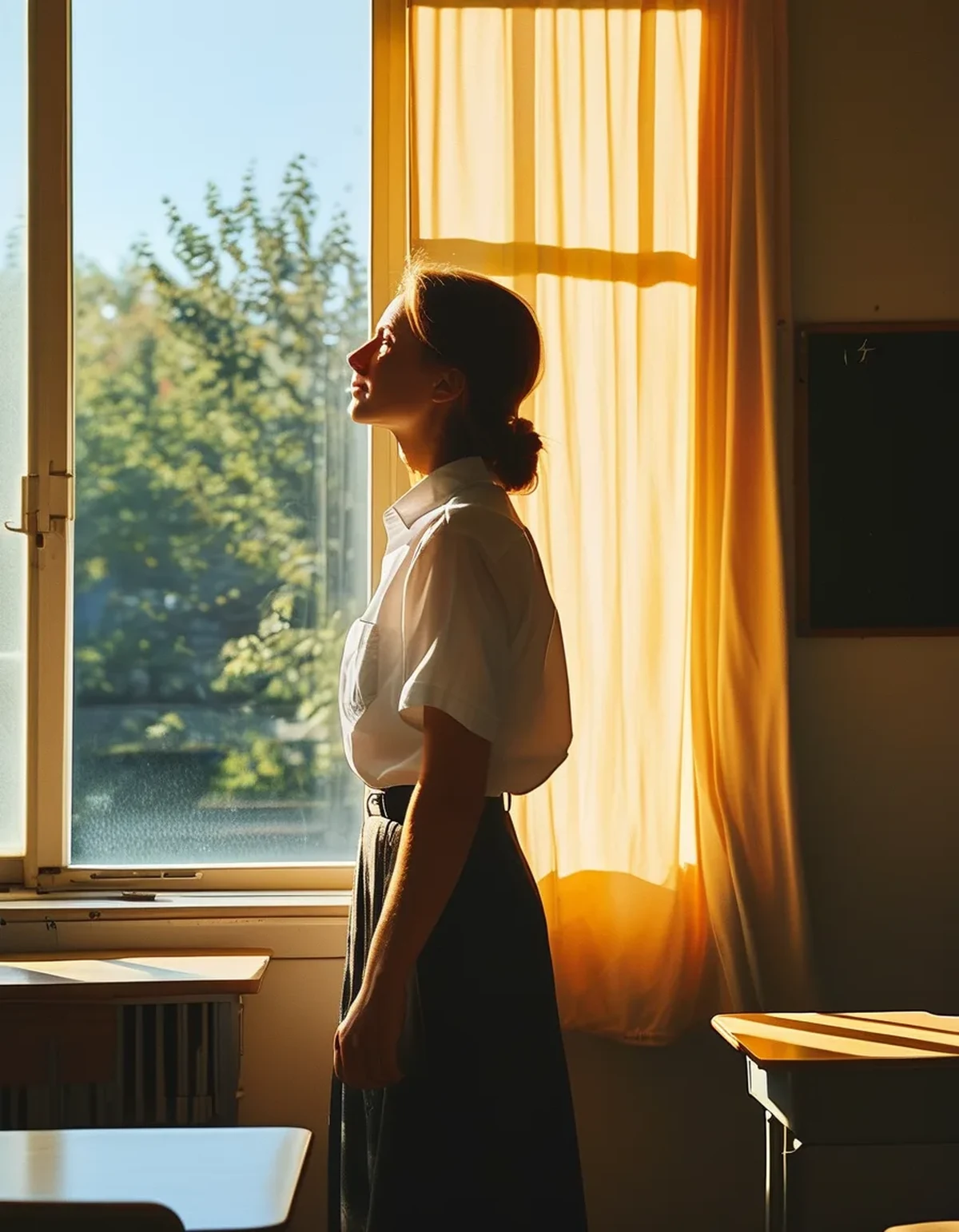
Why is a hot classroom so much more tiring than a hot anywhere else?
Because of who is producing the heat, who cannot escape it, and what you are doing in it.
A room full of people is a substantial heat source. Each person at rest gives off heat continuously, and a class of twenty-five plus a teacher, computers, and a projector adds up to a meaningful thermal load in a sealed room.
Most school buildings have limited mechanical cooling. Many were built for a climate and a calendar where late August was not a teaching month, and the thermal mass of a masonry building holds heat overnight, so each day of a hot week starts warmer than the last.
Windows help less than people expect. Opening windows in a room warmer than outside works; opening them in the afternoon when outdoor air is hotter brings heat in. And in humid air, opening windows raises indoor humidity, which reduces your evaporative cooling.
Then there is what you are doing:
Standing all day. Standing raises metabolic rate meaningfully above sitting, and it means continuous postural muscle work. You are producing more heat than everyone else in the room and shedding it in the same conditions.
Talking continuously. Sustained speech involves ongoing respiratory and laryngeal effort, and a warm dry throat makes voice production harder, so you push harder, which fatigues faster.
Moving constantly. Circulating between desks, gesturing, writing on a board. It is low intensity and it is continuous for six hours.
And you cannot leave. The single defining feature of the job is that you cannot step out when you overheat, and the ability to self-regulate is what makes heat tolerable in most other work.
What can you actually control in a room you do not control?
More than it seems, and none of it involves the thermostat.
Manage the airflow rather than the temperature. A fan that moves air across the room is worth several degrees of perceived cooling, because air movement drives evaporation. One good fan positioned to create a cross-flow beats two pointed at a wall.
Time the windows. Open early morning and after school when outdoor air is cooler; close windows and blinds during the hottest part of the day. This is how buildings without air conditioning have always been managed, and it works.
Close the blinds on the sun-facing side. Direct solar gain through glass is a large heat input, and blocking it before the room heats is far more effective than trying to cool afterwards.
Sit down when you can. Every seated period is a reduction in your own heat production. Reading aloud from a chair, or teaching from a stool during a longer explanation, is a legitimate energy strategy.
Protect your voice. Warm dry air is hard on the vocal folds, and hydration is the primary protection. Sip water throughout rather than drinking a large amount at lunch. Use amplification if it is available, and use quiet attention-getting signals rather than volume.
Cool your forearms and wrists at the sink between lessons. Sixty seconds of cool water on high-blood-flow areas measurably reduces heat strain, and it fits into a passing period.
Dress for the room, not the commute. Loose, light, breathable, and layerable, since some rooms in the same building will be freezing.
Plan the hardest teaching for the morning. The room is coolest and so are you. Afternoon in a hot classroom is the worst possible slot for anything demanding, and moving it is often within your control.

What Nobody Tells You About the First Weeks Back
The tiredness is not proportional to the work. The first fortnight is genuinely exhausting in a way that the same workload in October is not, and heat is a significant part of the difference.
Your voice is unconditioned. After a summer of ordinary talking, six hours of projected speech is a large jump in load. Voice problems cluster in the first weeks back and again in midwinter, and the first cluster is largely a conditioning issue.
Students are hot too, and it shows as behaviour. Warm rooms reduce concentration and increase restlessness, which increases classroom management demand, which costs you more energy. The heat bill arrives twice.
Dehydration creeps up because you cannot drink freely. Limited opportunities to use a bathroom lead many teachers to under-drink deliberately, and that directly worsens heat tolerance and voice quality.
Sleep is disrupted at both ends. Warm nights reduce sleep quality, and the schedule shift back to early mornings takes one to two weeks to settle. You are recovering less from a harder day.
The afternoon crash is thermal as much as nutritional. Post-lunch dip is real, and a warm afternoon room amplifies it substantially.
It genuinely improves. Buildings cool through September, your voice conditions, and the schedule settles. Knowing that the first two weeks are the worst of the year makes them easier to pace, and pacing is the actual skill.
How do you pace the transition into autumn?
Treat the first fortnight as the hardest of the term and plan accordingly.
Protect the evenings deliberately in the first two weeks. Not because you are being precious, but because the recovery demand is genuinely higher and the temptation is to spend evenings on setup work.
Front-load your preparation before the heat. Work done in a cool morning classroom is worth more than the same work done at 4pm in a hot one.
Hydrate on a schedule. A bottle on the desk, sipped between activities, is more effective than large volumes at breaks, and it protects your voice as well as your heat tolerance.
Take the cooling opportunities that exist. Cooler rooms in the building, shaded outdoor spaces, and a minute at a sink all add up over a day.
Watch for heat illness signs in yourself and in students. Headache, nausea, dizziness, unusual irritability, and confusion are not just discomfort. Anyone showing them needs to cool down and be assessed, and that is a safeguarding matter as much as a health one.
Expect the flip. Within a few weeks the problem inverts — heating comes on, indoor air becomes dry, and voice problems shift from heat to dryness. The same hydration habit serves both, and a small humidifier in a classroom is one of the highest-value purchases a teacher makes.
Use the seasonal change as a reset point. Once the rooms cool, energy recovers noticeably. If it does not — if the fatigue persists deep into October — that is worth investigating rather than accepting, since persistent exhaustion has causes other than the timetable.
This is general guidance rather than medical advice. Persistent fatigue, voice loss lasting more than two weeks, or symptoms of heat illness warrant seeing a doctor.
FAQ: Hot Classroom Questions, Answered
Why am I so much more tired in the first weeks back?
A combination of heat, a full day of standing and speaking after a break, disrupted sleep from warm nights, and a schedule shift. The thermal component is larger than most teachers assume.
Does a fan actually help if it just moves hot air?
Yes. Moving air accelerates evaporation from your skin, which is your main cooling mechanism, so it lowers perceived temperature considerably even when the air itself is warm.
Should I open the windows?
Early and late, yes. During the hottest part of the day, opening windows to hotter outdoor air brings heat and humidity in. Close windows and blinds before the room heats rather than after.
Why does my voice go first?
Warm, dry air and sustained projection are a demanding combination on unconditioned vocal folds. Hydration, amplification where available, and non-vocal attention signals are the three things that help most.
TL;DR:
- A full classroom is a large heat source, most school buildings hold heat, and the teacher is the one standing and talking all day.
- Airflow, blinds, and window timing give you more control than the thermostat ever will.
- Sit when you can, protect your voice with steady hydration, and put demanding teaching in the cooler morning.
- The first fortnight is the hardest of the year, and it genuinely improves as buildings cool.
Put a fan where it creates a cross-flow rather than pointing it at yourself. The whole room changes.
Keep Reading
This article is for general informational purposes only and is not medical advice. Always consult a qualified health professional for guidance specific to you.