Why Standing Still at the Front of a Classroom All Day Tires the Body Differently Than Walking the Same Hours Would
A teacher who stands mostly still at the front of a classroom for six hours a day can end up more physically fatigued than a colleague who walks briskly for the same six hours, which seems backward since walking is the more strenuous activity on paper, and the gap comes down to what kind of muscular work standing still actually requires that walking doesn’t.

Why Standing Still Requires Constant Static Contraction
The load: standing-still-for-extended-periods-requires-postural-muscles-to-hold-a-constant-low-level-static-contraction-the-entire-time-with-no-natural-point-of-rest-built-in (standing still for extended periods requiring postural muscles in the legs, hips, and back to hold a constant, low-level static contraction essentially the entire time, with no natural point of rest built into that posture at any point, per the classroom-voice-care logic — standing-still-for-extended-periods-requiring-postural-muscles-in-the-legs-hips-and-back-to-hold-a-constant-low-level-static-contraction-the-entire-time-with-no-natural-point-of-rest-built-in), and the reframe (stillness itself being the demanding part, not the absence of demand)).

Why Walking Distributes That Same Load and Allows Rest
The contrast: walking-distributes-muscular-load-dynamically-across-a-full-gait-cycle-letting-different-muscle-groups-alternately-contract-and-briefly-rest-with-every-single-step-taken (walking distributing that same overall muscular load dynamically across a full gait cycle, letting different muscle groups alternately contract and then briefly rest with essentially every single step taken, in a way standing still structurally cannot replicate, per the teacher-standing-all-day-guide logic — walking-distributing-that-same-overall-muscular-load-dynamically-across-a-full-gait-cycle-letting-different-muscle-groups-alternately-contract-and-briefly-rest-with-every-single-step-taken), and the frame (movement itself providing built-in recovery that stillness structurally denies)).
How Scheduled Micro-Movement Breaks Counter That Static Load
The fix: schedule-brief-thirty-second-micro-movement-breaks-like-a-few-steps-or-a-calf-raise-between-classes-specifically-to-interrupt-sustained-static-contraction-before-fatigue-accumulates (scheduling brief, thirty-second micro-movement breaks, like a few steps taken or a couple of calf raises, specifically between classes, in order to interrupt sustained static contraction deliberately before fatigue has a chance to accumulate across the full day, per the teacher-desk-movement logic — scheduling-brief-thirty-second-micro-movement-breaks-like-a-few-steps-taken-or-a-couple-of-calf-raises-specifically-between-classes-to-interrupt-sustained-static-contraction-before-fatigue-accumulates), and the frame (short deliberate movement substituting for the rest that standing still never provides on its own).
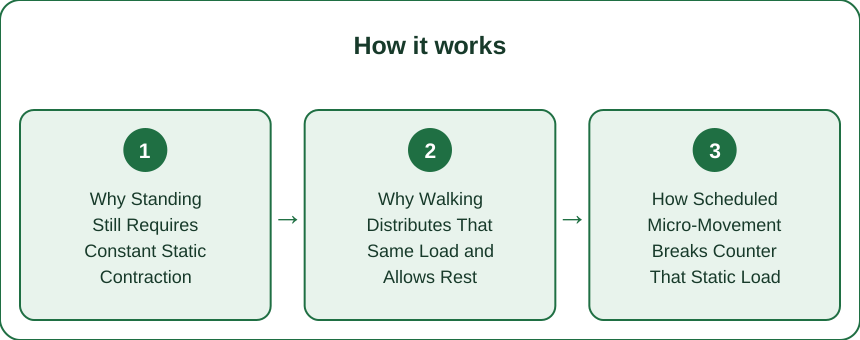
Standing still for extended periods requires postural muscles to hold a constant, low-level static contraction with no natural point of rest, while walking distributes that same load dynamically across a gait cycle, letting different muscles alternately contract and briefly rest with every step. Scheduling brief thirty-second micro-movement breaks between classes interrupts that sustained static contraction before fatigue accumulates, giving standing still the built-in recovery that stillness alone never provides.
Keep Reading
This article is for general informational purposes only and is not medical advice. Always consult a qualified health professional for guidance specific to you.